False Positive UI: How Bad UX Drives Users to Bail
The Problem: A Destructive Default and the Real Cost of Misleading Confirmation Patterns
I like to put familiar TV shows and movies on as background noise while I work. It sounds like it should be a distraction, but it actually helps me focus. So I keep a small library of comfort content saved on my cable provider’s DVR: I Love Lucy, Big Trouble in Little China, the usual suspects.
But there is one part of this DVR interface that makes me want to throw the remote across the room. It is tiny, but it is a perfect example of how bad UX and dangerous defaults cause real frustration.
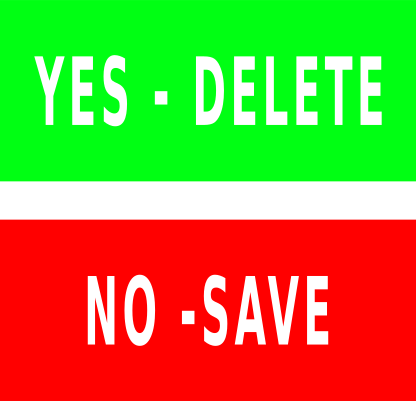
After a recording finishes playing, the DVR shows a two-option menu:
YES Delete
NO Save
Left to right.
Top to bottom.
And the default focus is on YES Delete.
This is a classic false positive trap. The word “Yes” looks like a normal confirmation, but it triggers the destructive action. Combined with placement bias and a user’s natural impatience, you end up with accidental deletions waiting to happen.
There is a good discussion on this pattern here:
Should “Yes, delete it” be red or green?
The Problem: A Destructive Default# Where is the Confirm Delete?
I am not perfect. I move quickly through screens. One careless click later, and goodbye Ricky Thinks He Is Going Bald.
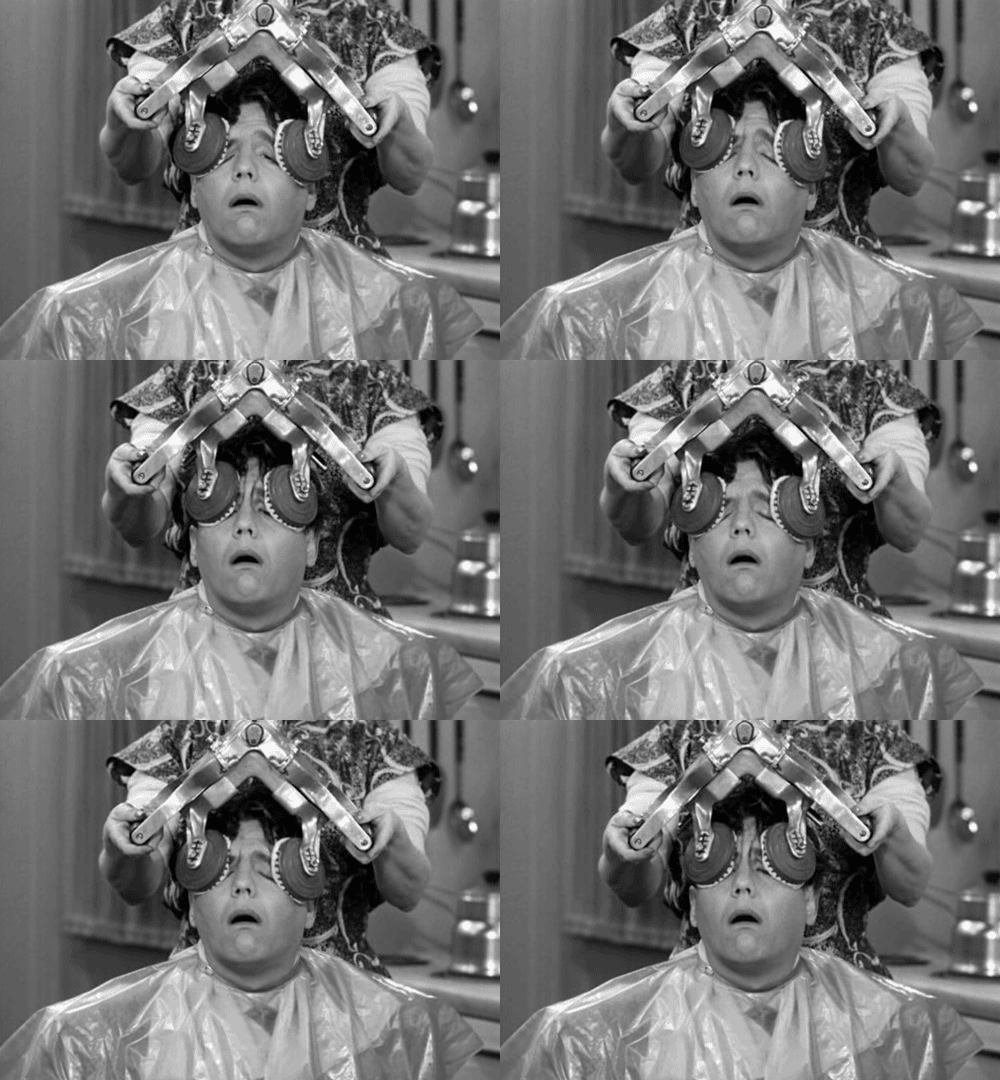
A simple confirmation step would solve this. Instead, the UI assumes:
“You watched it, therefore you no longer need it.”
Maybe storage costs are a factor. Maybe it is legacy design. Either way, the logic does not match real user behavior.
The Problem: A Destructive Default# Better UX Through Better Defaults
Good UX avoids dangerous assumptions. In this case:
- Default to Save, not Delete
- Use clear labels such as “Delete recording”
- Use visual cues so destructive actions feel destructive
- Require a confirmation dialog before erasing content
- Respect human error, haste, and impatience
These are not new ideas. They are standard UX guardrails.
The Problem: A Destructive Default# When Bad UX Drives Users Away
If I accidentally delete my commercial-free Jack Burton one-liners one more time, I may start researching new providers.
Small UX choices create big consequences. Confusing defaults, unclear labeling, and destructive actions without confirmation all break trust. And once a user loses trust in an interface, it is extremely hard to earn back.
Want to Improve UX and Interaction Design on Your Product?
False positive patterns and unsafe defaults are more common than they should be. If your app or site needs clearer interactions, safer flows, or better error prevention, I can help audit and refine your UX patterns.
Ready for a UX review or interface cleanup?
Request a UX Review